
How to Find Simi Valley Residents
A Simi Valley residents directory search works like a chain of small proofs. Begin with what you already know. An address opens the parcel layer. The Ventura County map then leads to an APN and a document number. A name can point toward a court division or a vital-record application. It can also lead to a business filing or a library shelf. Each answer means something different. A deed names the parties to one instrument. A census page captures a household on a single day; neither proves a later address.
Keep the order simple. Give each office a request it can act on. Keep Simi Valley city records apart from Ventura County records, since the custodians differ. When the online trail runs cold, the counter, phone, mail, library, or archive still work. A narrow California Public Records Act request fits the narrow cases the record type allows.
- Fix the place with the Ventura County GIS viewer, the standardized situs address, and the APN or legal-map references.
- Check the Assessor and Tax Collector for property characteristics, tax channels, and the limits on owner or mailing information.
- Use the Clerk-Recorder for a deed, lien, map, or other recorded instrument, beginning with the document clue in the parcel layer.
- Choose the right Ventura Superior Court division, vital-record copy type, voter channel, or state business and license search.
- Bridge older years through Simi Valley library staff, the Historical Society, Museum collections, census schedules, newspapers, and probate.
Simi Valley Records Office Map
Simi Valley sits in southeastern Ventura County. The city and the county divide the work. City Hall at 2929 Tapo Canyon Road keeps municipal minutes, resolutions, ordinances, annexation files, permits, agreements, and city correspondence. The Ventura County Clerk-Recorder holds deeds, birth, death, and marriage records, plus fictitious business names. The assessor, elections, court, and tax offices all sit in Ventura. The East County Clerk-Recorder counter in Thousand Oaks is closer to Simi Valley. It works by appointment. Weekday and alternate-Friday hours differ from the main counter.
History matters here too. Before Simi Valley incorporated in 1969, roads, permits, and land-use matters belonged to the county. After incorporation, City Clerk files can explain why the custodian changed. Later annexations kept redrawing the line. Probate and juvenile court records use the Juvenile Justice Center in Oxnard. One resident question may need three offices. Ventura, Thousand Oaks, and Oxnard channels can all come into play. The office split is the first filter in a useful Simi Valley residents directory workflow.
Need a visual start? The Ventura County Clerk-Recorder entry page lays out the county record family. It sits behind many Simi Valley searches.
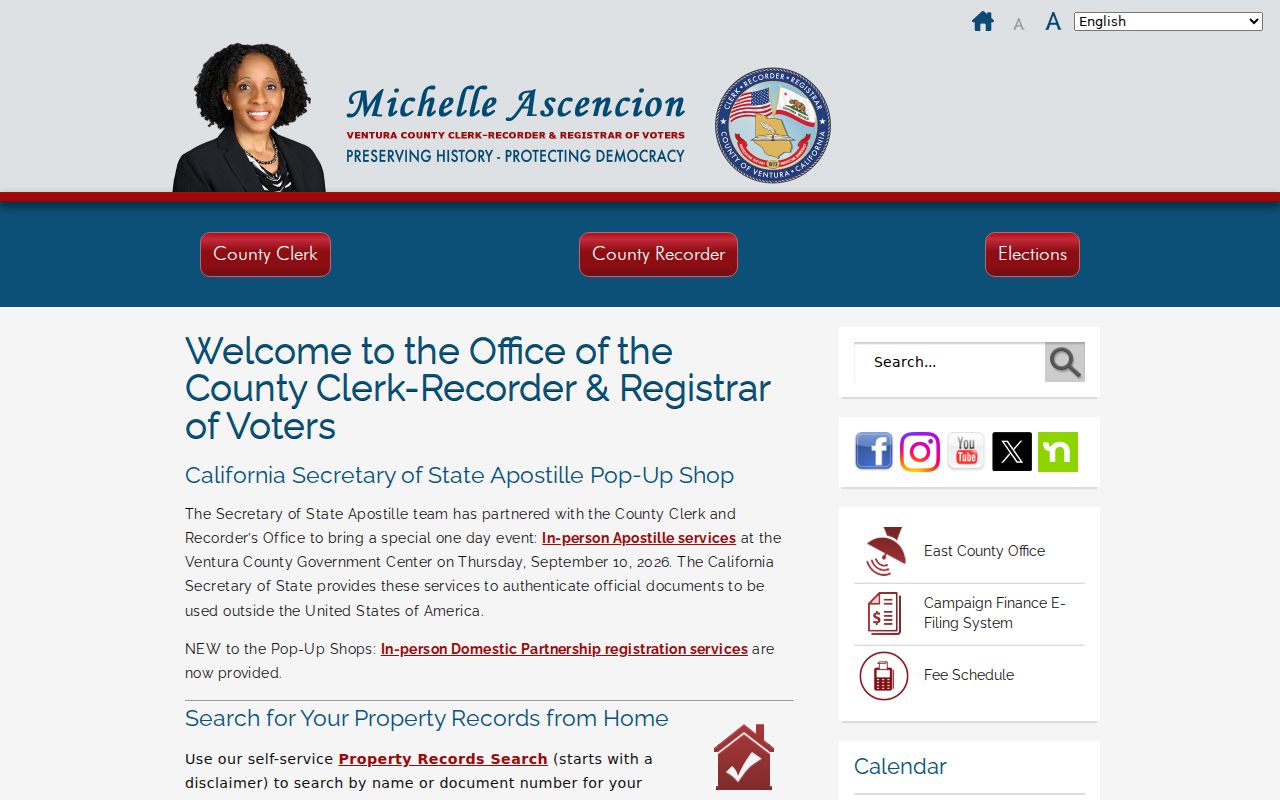
The county entry point routes you to the right custodian. It does not put every grantor-grantee index online. Appointments and written requests remain part of the real access path.
Note: The East County counter is closer to Simi Valley, but its appointment and alternate-Friday schedule differs from the main Ventura counter.
Simi Valley Resident Records, By Keeper
Each county office describes a different relationship to a resident. The Ventura County Assessor Property Search supplies APN, situs, characteristics, values, and maps. Owner names stay off the public web view, though. California Revenue and Taxation Code sections 408 through 408.3 shape what may be released. Counter and data rules shape it too. The recorder is different. It establishes a recorded conveyance between named parties. The Treasurer-Tax Collector handles tax bills and the secured, unsecured, supplemental, and delinquent rolls. The Registrar of Voters keeps a purpose-restricted file, not an open street list.
Ventura County Recorder
800 S. Victoria Avenue
Ventura, CA 93009
805-654-3665
Clerk-Recorder appointments and records
Ventura County Assessor
Parcel, APN, map, and assessment information
805-654-2181
Property search and data routes
Registrar of Voters
800 S. Victoria Avenue, Lower Plaza
Ventura, CA 93009-1200
805-654-2664
The main counter in Ventura keeps weekday hours, 8 a.m. to 4:45 p.m. The East County location sits at 2100 E. Thousand Oaks Boulevard, Suite A, in Thousand Oaks. Hours run Monday through Thursday. Fridays are alternate, with the county stating the schedule. Call before traveling. When a web search hides the field you need, the recorder, assessor, and tax collector phones plus the elections email are practical fallback channels.
Simi Valley Parcel Lookup First
For an address search, the Ventura County Public Works Agency GIS Viewer is the cleanest first step. It carries APN and APN10 values, split situs fields, tract and map references, book, page, block, parcel, acreage, zoning, district, and improvement square footage. Document number, date, and type ride along too. The service supports map clicks, advanced and distance queries, statistics, distinct values, ordering, pagination, and extraction. A 1,000-record service maximum applies. Owner names and mailing addresses are both absent.
That gap is worth understanding. Situs means where the land lies. A tax mailing address is where notices go, and it may name an agent, trust, business, manager, or a different home. A legal description is the durable reference a deed uses. None of these facts proves who occupies the house. The parcel layer is a bridge to a record, not a finished Simi Valley residents directory.
| GIS field or tool | Use in a resident search |
|---|---|
| APN and APN10 | Carry the parcel into assessor, recorder, tax, and permit requests. |
| Situs number, direction, street, type | Normalize the address and locate the right parcel. |
| Tract, map, book, page, block, parcel | Follow subdivision and parcel changes when an address or APN shifts. |
| DOC_NR, DOC_DT, DOC_TYPE | Point to a recent recorded instrument to request from the Recorder. |
| Identify and distance query | Map adjacent land and nearby parcels without treating geometry as identity. |
The key terms below keep a Simi Valley address search from blending unlike records.
- Parcel
- A mapped unit of land identified by an APN and legal-map references.
- Situs address
- The location of the parcel, distinct from a tax mailing address.
- Index
- A finding aid that points to a document, case, or entry; it may not include the image.
- Roll
- An organized assessment, voter, or tax list with its own keeper and access rule.
- Criss-cross directory
- A reverse address section that may associate a listed person or phone with a street number.
For parcel details, the published Ventura parcel schema beats a generic map label. It carries the fields that matter. Write down when you retrieved the data, since assessment and GIS layers shift over time, and a condominium, master parcel, common area, or flag lot can demand a closer read before you trust the answer.

The assessor portal and the GIS service each do half a job. GIS hands you location and document clues.
The assessor owns the lawful route to assessment information. Use both for a full Simi Valley parcel picture.
Current Simi Valley Resident Directory Sources
Simi Valley has no single official roster of residents. That is the first thing to accept. The word directory really covers several partial rolls, each with its own keeper and its own access rule. The table below helps you pick the right source for a Simi Valley residents directory question without turning an owner, voter, licensee, or business contact into a claim about who actually lives somewhere.
| Source | What it can show | Keeper | Access route |
|---|---|---|---|
| Parcel and assessment records | APN, situs, characteristics, assessment and possible mailing clues | Ventura County Assessor and GIS | Web, counter, request; owner display has limits |
| Recorded instruments | Grantor, grantee, document date, legal description | Ventura County Recorder | Appointment, counter, phone, written copy request |
| Voter status | Individual registration verification and election details | California Secretary of State | Self-verification only; file access is purpose restricted |
| Court case inquiry | Party names, case category, filing dates, docket events | Ventura Superior Court | Separate online divisions, clerk files, mail, microfilm |
| Business or license record | Entity, agent, license status, public business address | SOS, DCA, city, county | Free searches; certified orders vary |
Official records and commercial people-finder compilations are built for different jobs in a resident lookup. A compilation can stitch together stale public facts. A custodian, by contrast, can explain the field, the date, the eligibility rule, and the correction path behind any city directory entry.
| Route | Strength | Limit |
|---|---|---|
| County or state custodian | Known source, field definition, and correction channel | May require a purpose, appointment, fee, or copy request |
| Library or archive | Historical context, catalogs, microfilm, and staff interpretation | Holdings and years vary; an index is not a certified record |
| Commercial compilation | May gather several public clues in one result | Stale merges, unknown provenance, and no authority to correct the source |
Match a name to a person with care. Use two independent dates or addresses. Preserve middle names, suffixes, married or prior names, and party roles along the way. A Simi Valley resident lookup grows stronger when a court entry, recorded document, archive item, or official filing agrees with a second source. Never stretch a source past what it actually records.
Note: A voter match, business address, or recorded party is a dated clue. It is not a full statement about a Simi Valley household.
Simi Valley Court Lookup Clocks
Simi Valley has no municipal court. The Ventura Superior Court case inquiry splits into Civil, Probate and Small Claims; Family Law; and Criminal and Traffic. Those systems do not share one history. Family entries begin September 1, 1991. Municipal criminal cases start January 1, 1989. The online criminal route is aimed at current infractions and misdemeanors. Superior Court felony data mainly ties to the 1995 consolidation. Staff can search unlimited-jurisdiction records back to 1873. Older files sit on microfilm or require off-site retrieval.
A web hit is not the official court record. Online fields may hold a case number. They may also list title or party names, filing date, category, docket events, hearing dates, and a published disposition. Criminal name searching takes a first and last name or a case number. Traffic runs on a citation number. Since June 21, 2021, criminal web searches cannot use date of birth or a driver-license number. So filing date, case type, party role, and an in-person file review carry real weight in a Simi Valley court lookup.
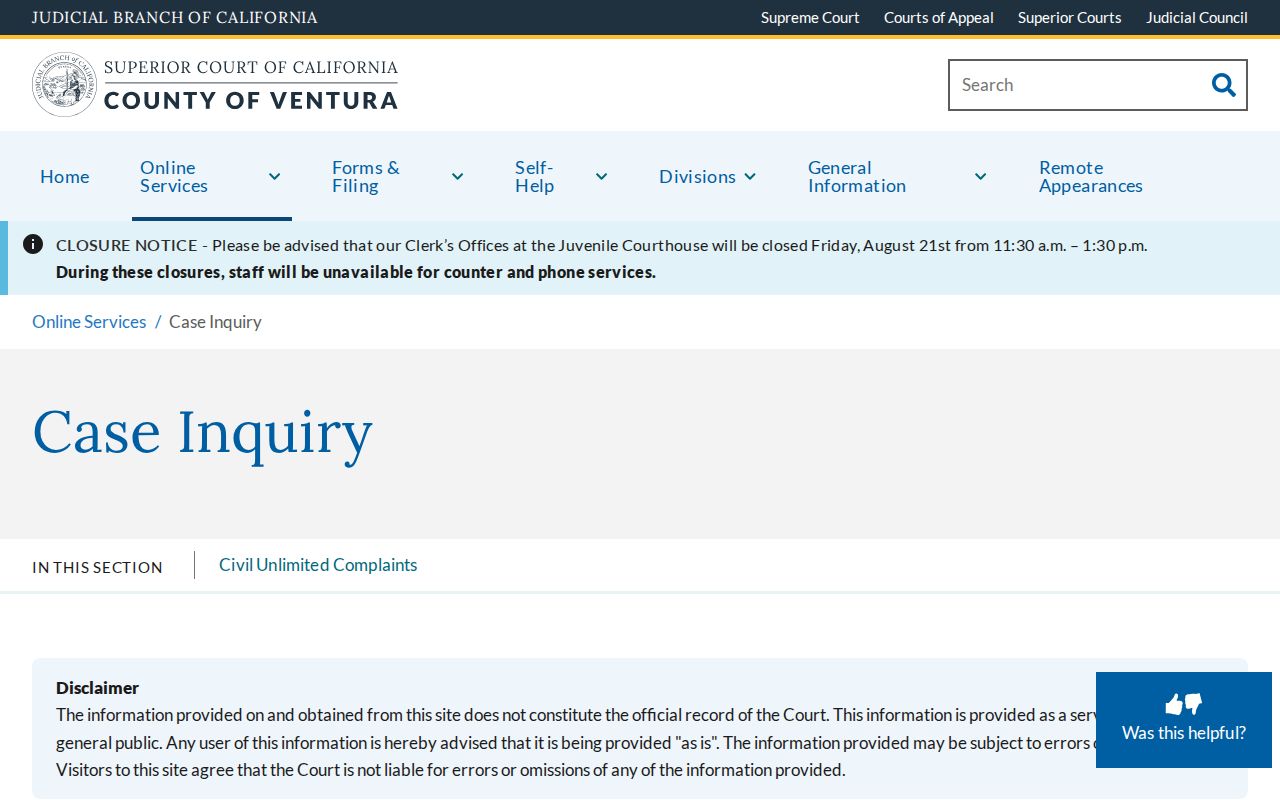
Requesting a file takes picture identification. The clerk pulls up to five cases per transaction. Copies run 50 cents per page, with separate charges for certification and exemplification. Off-site files need at least two court days. A large request can take five working days. Mail requests go through the court forms to the Ventura mailing address. Juvenile, adoption, and probate materials may route to Oxnard instead. A careful Simi Valley residents directory search treats the court as a date and party source. It is never a shortcut to identity.
Note: Ventura court coverage dates describe digitization and entry systems. They do not mark the year a Simi Valley event first occurred.
Simi Valley Voter Roll Limits
The California voter-status tool verifies one person at a time. It asks for first name, last name, date of birth, county, and identifying information when needed. It then returns a match and election details to the requesting voter. It does not let an ordinary user type a Simi Valley street. Nor can they browse registered voters that way. Elections Code sections 2188, 2194, and 18109 limit affidavits and file use. Qualified election, scholarly, journalistic, political, and governmental purposes stand apart from a casual directory search.
A qualified statewide voter file can hold name, birth date, registration date, residence and mailing address, precinct, contact information, party preference, and participation history. It never reveals ballot choice. The statewide file costs $100. A specific request can name up to ten voters at $30 each, capped at $100. Confirm county file prices and older precinct products with the Ventura Registrar. Older order forms may lag the current schedule. Confidential voters and Safe at Home participants get extra protection.
Voter registration is a dated snapshot, nothing more. A no-match result does not prove a person never lived at an address, and a match does not prove current occupancy. Use any result only for its permitted purpose. Pair it with a lawful, independent record before drawing conclusions about a Simi Valley household.
Simi Valley Vital Record Copies
Ventura County keeps the birth, death, and marriage records for local events. The California Department of Public Health holds statewide birth and death records dating from July 1905. There is no blanket 100-year closure in California. Instead, Health and Safety Code sections 103525 and 103526 split certified copies into two kinds. An authorized copy goes to eligible relatives, registrants, certain attorneys, adoption agencies, courts, and official government requesters. Anyone who can identify a non-confidential record can usually obtain an informational copy, which carries the identity-use legend.
Fees set for 2026 run $31 for a birth copy. A death copy costs $26, a marriage copy $19, and a divorce certificate $18. The application wants the event, the names, date and place, and parents or spouse details where relevant. It also wants your contact information, relationship, entitlement, number of copies, fee, and signature. Authorized requests by mail also need a perjury declaration with a notarized sworn statement. CDPH works through mail forms rather than a direct electronic ordering portal. A no-record search fee still applies. Confidential marriage and adoption records carry their own restrictions.
Begin with the CDPH Vital Records instructions for statewide forms. You can also turn to the Ventura Clerk-Recorder for a county event. Before July 1905, the trail shifts to county registers. Also consider church or mission material, cemetery files, probate, newspapers, and census schedules. A library transcription can point the way, but only the custodian issues the certified copy.
Simi Valley City Hall Files
City Clerk Lucy Blanco anchors municipal records at City Hall, 2929 Tapo Canyon Road, Simi Valley, CA 93063. Her office answers at 805-583-6748 and CityClerk@simivalley.org, Monday through Friday, 8 a.m. to 5 p.m. Council minutes, resolutions, ordinances, claims, subpoenas, agreements, deeds, and annexation files can name applicants, signers, and property parties. They can also name organizations and appointed officials. Treat them as people and address clues. They are not a complete resident roll.
The city's HDL Business Search pairs a selector with a value field. It adds an optional start-date range and a search button. Planning and Building records may list an address, permit type, project number, applicant, contractor, issue date, final date, and inspection trail. Police records need a separate request and may be restricted. Keep in mind that the city does not run the county court. It also does not run the county recorder or a public utility customer list. A sharp request names an existing record series, an address or APN, a date range, a department, and an electronic format.
Annexation files earn special attention in historical work. They explain why an old address passed from county custody into city records. For a broader shelf, the Simi Valley city directory collections tie municipal files to libraries, census schedules, and archives. They do so without assuming a city employee or meeting participant actually lived in Simi Valley.
Simi Valley Business and License Records
Business and occupational records prove affiliation, not residence. California's bizfile Online Business Search takes an entity name or file number. Its advanced filters cover entity type or group, status, initial filing dates, and begins-with logic. A result can show the entity number, formation or registration date, status, standing, and jurisdiction. It may also list the street or mailing address, agent, and Statement of Information due date. Recent filing PDFs are often free, though certified orders require an account. The basic result list caps at the 500 closest matches.
Different tools answer different questions. The Simi Valley HDL search covers one piece of ground. Ventura fictitious business-name filings and the California Department of Consumer Affairs license search each cover separate ground. DCA results vary by board. They may list name, license number and type, status, issue or expiration dates, address of record, and discipline links. The Secretary of State notes that ownership, phone, email, and subsidiaries do not become part of the record. The same applies across its filings. Never relabel an agent address or professional mailing address as someone's home.
These records shine when a family history search needs an organization link. A permit may name a contractor. A filing can help separate two Simi Valley people who share a name. They form one branch of the residents directory. They never replace a deed, court file, census household, or vital record.
Historical Simi Valley Resident Directories
The strongest local history sources are not a single digitized city directory. The Simi Valley Historical Society at Strathearn Historical Park holds pioneer-family files, photographs, letters, and personal objects. The Society dates to 1964, and the Strathearn property was donated in 1968. The Museum of Ventura County Research Library catalogs a Simi Valley Historical Society series with minutes, reports, membership directories, yearbooks, programs, newsletters, clippings, and photographs from about 1881-1998. Exact inclusive directory years and a named Polk or Haines run were not verified.
Simi Valley Public Library databases require a library card and PIN for remote subscription access. Ventura County Library local-history branches offer books, microfilm, and Ancestry Library Edition on branch computers. Ask reference staff for telephone books, school yearbooks, clipping files, obituary material, and reverse directories. A directory entry can suggest a person and address; a deed, census page, obituary, probate file, or second directory year should test it.
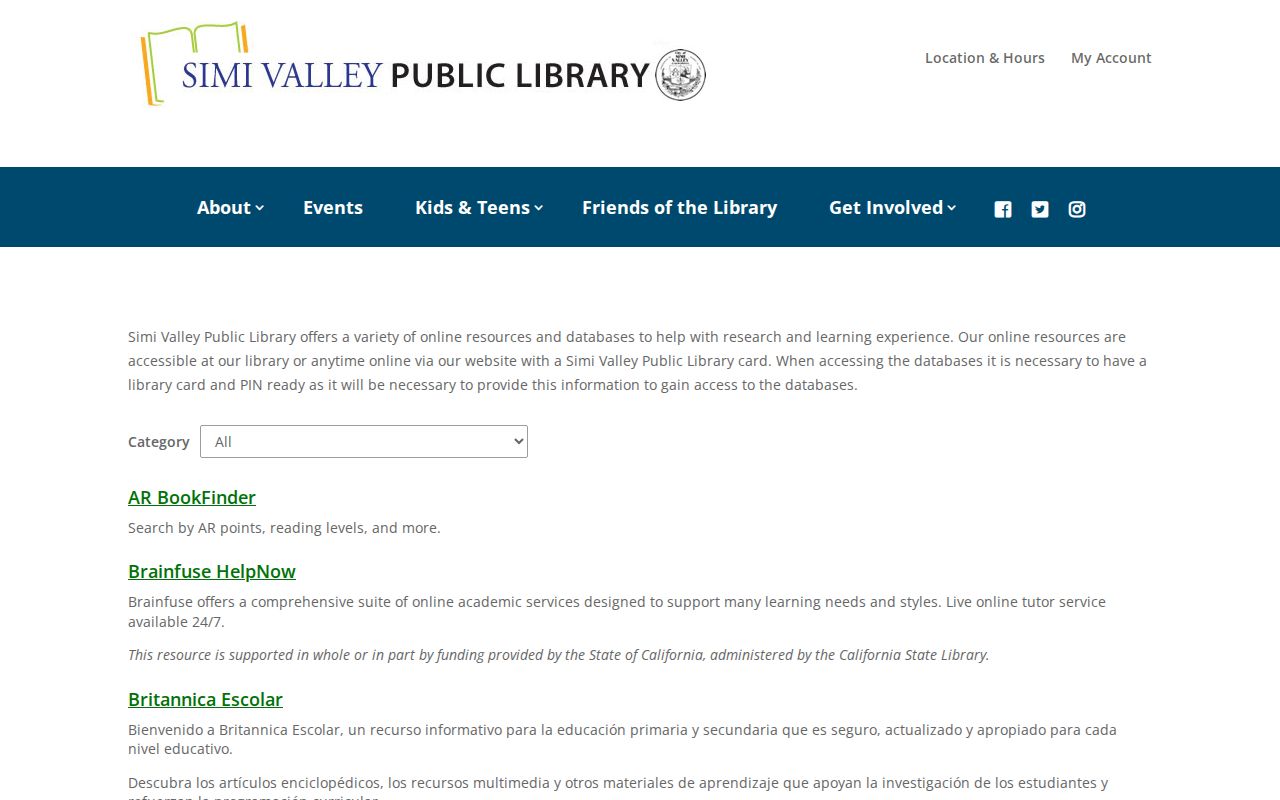
The library's resource page is the sensible first stop for database access. Staff can confirm the exact shelf location and the years a printed run covers. A directory entry may list an adult at an address, yet it proves neither property title nor a complete household.
Simi Valley CPRA Requests
The California Public Records Act, starting at Government Code section 7920.000, is the broad fallback for any identifiable existing record held by the city or county. A well-built request names the custodian and the record series. It also gives an address or APN, a beginning and ending date, a preferred electronic format, and any known project or document number. Asking an agency for "everyone who lived here" demands new research. Asking for a permit index, permit card, annexation agreement, or existing address layer asks for a record that already exists.
Agencies ordinarily decide disclosability within ten calendar days. A limited fourteen-day extension is allowed for unusual circumstances. Production can run longer. Duplication costs may apply. Exempt material may be withheld while segregable portions are released. Vital records, voter files, DMV data, juvenile and adoption matters, protected addresses, and court rules can each override a general CPRA request. Judicial case files follow court procedures, not a City Hall request.
For city-held material, use the Simi Valley City Clerk public-records request route. County records sit with a specific department. Identify whether the Assessor, Recorder, Tax Collector, Elections, or another office holds the series. A narrow request saves time. It also keeps a Simi Valley residents directory search on solid ground.
Note: The Public Records Act opens existing records but never compels an agency to build a custom resident history.
Simi Valley Address Privacy
California's Safe at Home program swaps a substitute mailing address for qualifying victims and threatened covered workers. Government Code sections 6205-6211 and section 6208.1 bar public display after a demand. Threatening publication is prohibited outright. Voter confidentiality rules, assessor restrictions, the federal Driver's Privacy Protection Act, and routine redaction guard other sensitive fields. A broker deletion request cannot rewrite a lawful deed. It cannot correct a county source record either.
The CCPA gives Californians access, correction, deletion, and opt-out rights under Civil Code sections 1798.100 and following. The 2026 DROP platform lets one resident send a single deletion request to more than 500 registered data brokers. Broker processing begins August 1, 2026. Those tools only reach broker-held copies. Corrections to a deed, case, permit, or voter record belong with the custodian that created it.
Lawful personal use. Public records can support family history, estate research, civic understanding, and personal safety. Do not use a Simi Valley residents directory search to stalk, harass, intimidate, or harm anyone.
Simi Valley Records Geography
Simi Valley's record trail has three physical destinations. Ventura holds the main county recorder, assessor, elections, tax, and court offices. Thousand Oaks offers the closer East County Clerk-Recorder counter. Appointments and public real-estate searches happen there. Oxnard keeps juvenile and adoption court material at the Juvenile Justice Center. Online portals cut travel, but an old deed, an off-site court file, a restricted voter product, or an archive request may still need the right counter.
The city's 1969 incorporation marks another boundary. Pre-incorporation road and permit questions may live in county files. Later annexation deeds and agreements sit with the City Clerk. Ventura County formed separate government in 1873. Before that, Simi evidence may rest in Santa Barbara County-era records, Mexican land-grant material, mission or parish files, newspapers, and family archives. A useful Simi Valley residents directory follows the jurisdiction at the event date rather than projecting today's boundary backward.
The Census Bureau's July 1, 2025 estimate puts Simi Valley at 124,861 people across 41.55 square miles. That scale explains why no single partial roll answers every question. Match the source to the fact. Preserve the source's limits. Verify with the custodian before relying on any result.