
Simi Valley City Directory Collections
A Simi Valley city directory lead is only as sound as its custody trail. The table separates collections that are identified by the research from collections whose exact title, publisher, or run still needs a librarian's confirmation.
| Collection | Years | Publisher/Where Held | Access |
|---|---|---|---|
| Simi Valley Historical Society pioneer files | Pioneer era onward; inclusive years not published | Simi Valley Historical Society at Strathearn Historical Park | In person during published park hours; ask for surname or address files |
| Museum Simi Valley Historical Society series | circa 1881-1998 | Museum of Ventura County Research Library; specific publisher not identified | Open on site; request material in advance |
| Simi Valley Public Library local history | Exact directory years not published | Library catalog, databases, local-history shelves, and reference staff | Card/PIN for remote subscriptions; ask staff about physical holdings |
| Ventura County Library local history | Exact runs depend on the cataloged holding | County branches, books, microfilm, and Ancestry Library Edition | In-library research and reference help |
| Federal population census | 1790-1950 public schedules | NARA, Ancestry, and FamilySearch | Name search or enumeration-district browsing |
| Exact Simi printed-directory run | Not established | No authoritative publisher, complete run, or repository was located | Use a catalog and reference request; do not infer years |
No authoritative exact Simi printed-directory run, publisher, reverse-directory years, or digitized entry was located. Ask each custodian to identify titles covering Simi Valley, Santa Susana, or nearby county areas. Two endpoints do not prove annual publication, and a generic neighboring directory needs a printed coverage statement.
Simi Valley's Strathearn Archive
The Simi Valley Historical Society is the most distinctly local starting point. The Society was founded in 1964, and the Strathearn property was donated in 1968. At Strathearn Historical Park, hundreds of photographs, letters, personal objects, buildings, and pioneer-family files preserve names that can predate suburban street numbering and modern directory coverage.
The useful story is an address story before it becomes a street story. A surname in a letter or object can point to a ranch, parcel description, or relationship later found in a deed or obituary. Docent knowledge and vertical files may bridge an old place name to a later street. Ask for pioneer surnames and address clues, then record the item reference instead of repeating an unverified tradition.
Note: Strathearn material can establish community connection and family context, but a photograph or letter is not proof of title or continuous residence.
Museum Simi Valley City Directory Series
The Museum of Ventura County Research Library catalogs an open-on-site Simi Valley Historical Society series within its clubs and organizations collection, circa 1881-1998. It includes minutes, reports, membership directories and yearbooks, programs, newsletters, clippings, and photographs. These records can supply a surname or address clue, but are not a complete resident roll.
The Museum requests a researcher's name and email, arrival date, and a note. Its Research Library is at 100 E. Main Street in Ventura; phone 805-653-0323. The Museum catalog record starts the request and does not establish a confirmed Simi city directory run.
Use a membership entry to generate a name, group, or date, then compare it with a census, deed, newspaper, or probate file.
See the Museum collection entry before planning an archive visit.
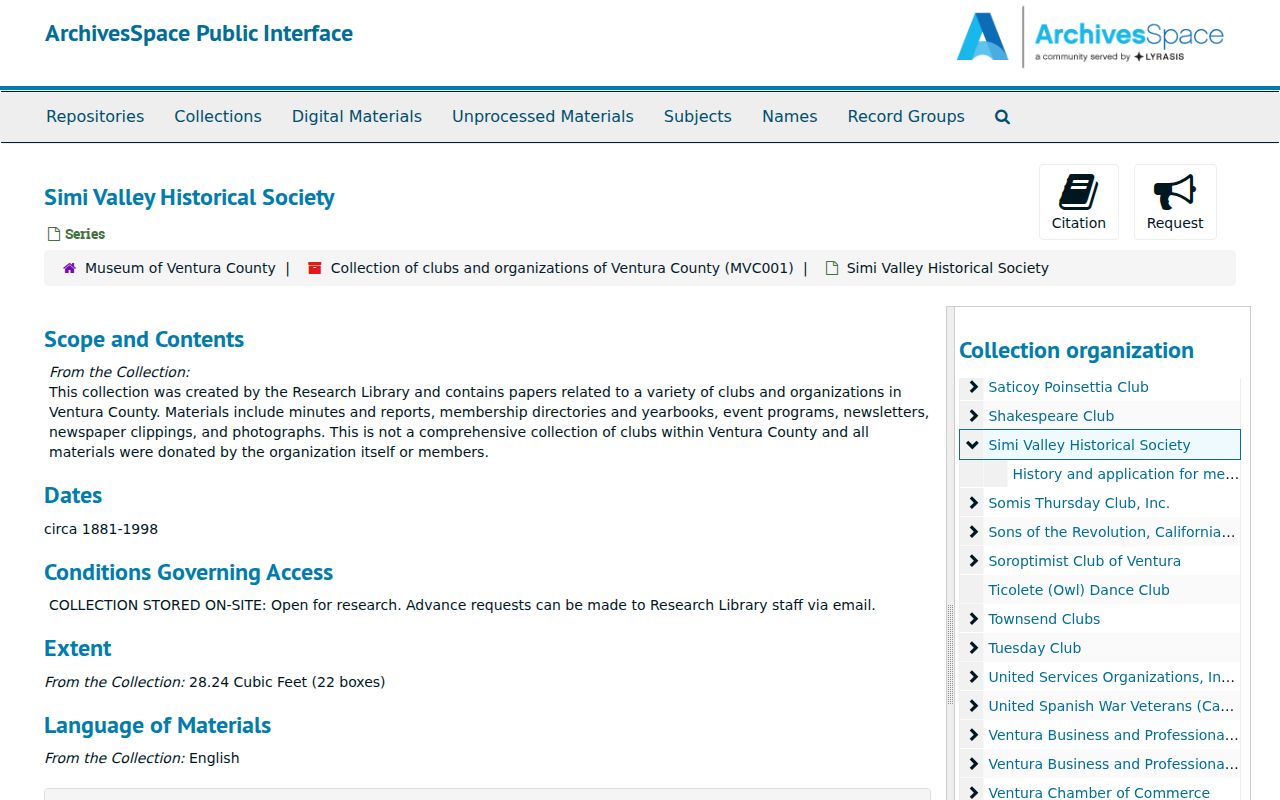
The catalog view distinguishes an open research collection from an online scan. A surname, organization, date range, and arrival date give staff a usable starting point.
Simi Valley City Directory Shelf
Simi Valley Public Library is independent of Ventura County Library. Any California resident may obtain its card free, while remote databases use a card and PIN. Public pages do not list exact Simi directory years or an obituary-index title. Ask for telephone books, yearbooks, clipping files, microfilm, and local-history material by title.
Ventura County Library describes local-history books, microfilm, and Ancestry Library Edition on branch computers, including census and vital sources. Search both catalogs, note the branch and call number, and ask whether staff help or a reader is needed.
Start with the Simi Valley Public Library catalog and reference entry point before visiting a shelf.
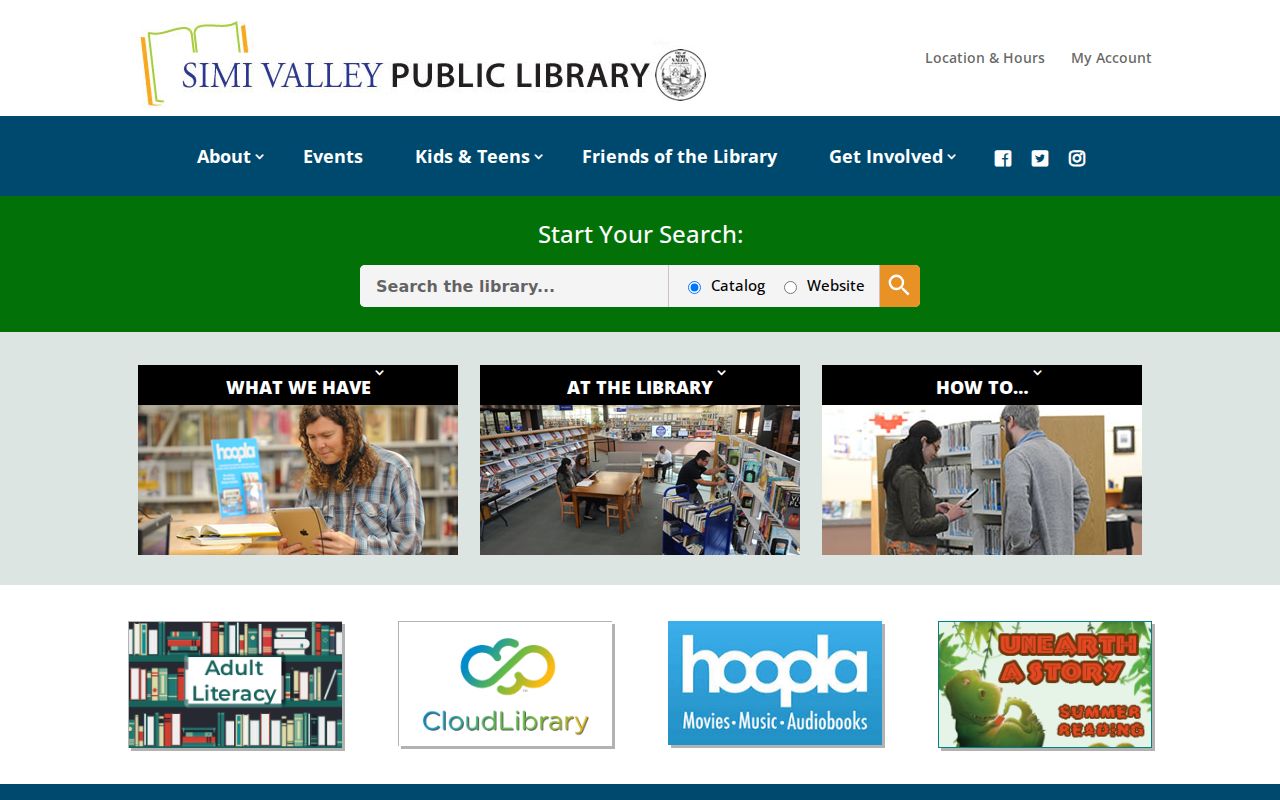
The library source supports catalog checks, database access, and a reference question about title, publisher, year, format, and reverse-section coverage.
Reading a Simi Valley City Directory
No open official scan exposed a Simi-specific entry. Begin with the title page, publication statement, geographic coverage note, and abbreviation key before reading an alphabetical or reverse section. Common fields are a method to check against the volume, not a claim about every edition.
| Name | Surname and given name or initials; a spouse may appear in parentheses |
|---|---|
| Occupation | Occupation or business line, if the volume records it |
| Address | House number and street, with local abbreviations or a rural-route note |
| Owner or occupant mark | A symbol or letter may identify ownership or another occupancy status; verify the key |
| Cross-reference | “See” entries, widow notation, a moved entry, or a second address |
- Criss-cross directory
- An address-first section arranged by street and number rather than by surname.
- Householder index
- A name-oriented list that usually highlights the main adult associated with an address.
- Abbreviation key
- The volume's legend for occupations, addresses, ownership, spouse marks, and cross-references.
Photograph or transcribe the key first. Record spelling exactly. A directory listing is a dated publisher snapshot, not a full address list.
Simi Valley Criss-Cross Directory Method
A reverse or criss-cross search can change a name question into an address question. The exact Simi reverse-directory years are not published, so a librarian should confirm that the requested volume has a street section and that its coverage statement includes the community. Once a volume is found, inspect the street heading, then follow house numbers in order.
- Write the historical street name and number exactly as found in a deed, census, newspaper, or family paper.
- Check the volume's boundary note for Simi Valley, Santa Susana, county, rural-route, or nearby-community coverage.
- Read both the alphabetical section and the street section; record each adult, mark, phone field, and cross-reference without expanding an abbreviation.
- Compare adjacent numbers and nearby streets, then check later or earlier volumes only when the librarian confirms their dates.
- Bridge a missing address with the legal description, tract, lot, block, and parcel references rather than inventing a street-renumbering year.
Telephone books may list a subscriber and omit occupation or spouse. A yearbook identifies a student or staff member, while an organization directory identifies participation. Each clue needs a second source.
Simi Valley Directory Census Pairing
The federal census through 1950 is the newest public census under the 72-year rule. It shows an enumerated household and relationships on a date. A directory supplies an adult name or street clue between census years. Neither source proves title or a complete modern household.
Pair the directory nearest April 1, 1950 with the census, then repeat with 1940 and earlier schedules. If OCR fails, use enumeration-district maps and browse the street sequence. Compare address, relationships, age, birthplace, and occupation, marking moves, lag, omissions, or changed place names.
Note: Census evidence is an enumeration-date snapshot, while a city directory may have been gathered earlier and printed later.
Simi Valley Genealogy Bridges
Newspapers connect a directory clue to notices, obituaries, marriages, school and community events, and property advertisements. Yearbooks place surnames in a school year; membership directories, newsletters, and clippings explain civic connections. Search surname, street, organization, and date, preserving title and page.
Probate or obituary records can explain a disappearance, while a later deed can show a successor. Use these as bridges, not substitutes for the deed or court file. For one address followed backward, the Simi Valley previous residents search keeps the layers together.
Before 1873, Simi Valley genealogy may require Santa Barbara County-era land and court sources. Mexican land-grant, mission or parish, cemetery, newspaper, probate, and census records may carry the evidence. Search the jurisdiction at the event date.
Simi Valley Directory Side Trails
A directory occupation or organization clue can be checked against affiliation records without turning it into residence proof. The California Department of Consumer Affairs search varies by board and may use name, business name, license number, city, or county. Results can show license type, status, dates, address of record, and public discipline links.
See the California professional-license search when a directory entry points to a regulated credential.
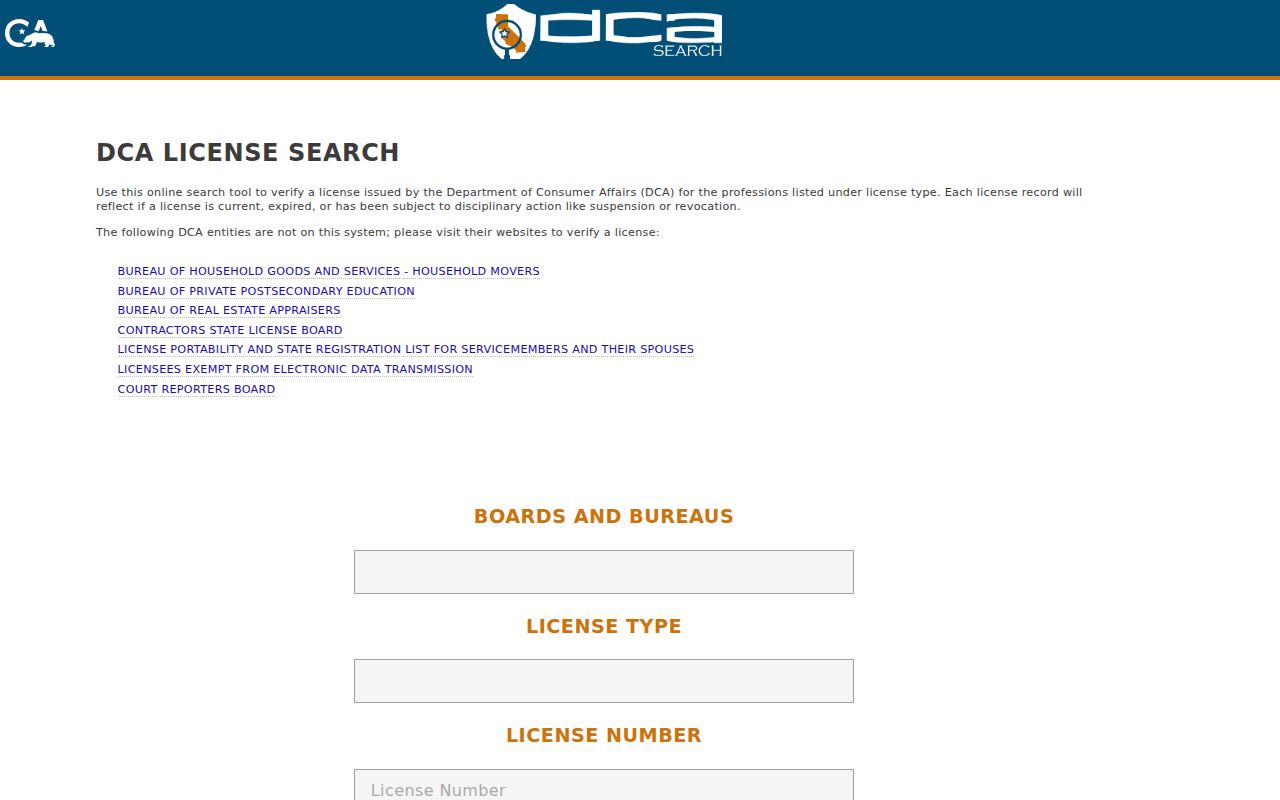
The license result can support identity matching or explain an occupation abbreviation, but a professional address may be a business or mailing address.
For a business or organization name, use the California bizfile Online Business Search as a filing lead, then compare the entity's date and address with the directory entry. Basic search accepts a name or file number; advanced filters include type, status, and initial filing date.
The business image helps separate affiliation from a claim that a person lived at a Simi Valley address.
Simi Valley City Directory Worksheet
A useful request asks: “Do you hold any city, suburban, county, telephone, rural-route, or reverse directories that include the community now incorporated as Simi Valley?” Add title, publisher, edition years, geographic coverage, call number, format, and access limits. Send it to both libraries, the Museum, and the Historical Society.
For each volume, inventory title, publisher, copyright year, gathered date, communities, alphabetical and street sections, spouse and occupation marks, telephone treatment, maps, advertising index, abbreviation key, supplements, and missing pages. Record “not stated” when silent.
- Copy the cover, title page, copyright statement, coverage note, and abbreviation key.
- Log name spelling, address spelling, page number, section, and every symbol exactly as printed.
- Mark whether the clue is a directory listing, census enumeration, deed party, obituary, probate statement, or organization member.
- Note the repository, request date, staff guidance, scan status, and any missing or restricted pages.
- Pair each address clue with the legal description or census enumeration district before drawing a conclusion.
The worksheet keeps each directory lead attached to its source, date, and limits.